
Barbie™ Horse Ride & Rescue
PIKPOKAdventure
4.0216.00 Reviews
- Version
- 1.4.0
- Installs
- 500.00K
- Age Rating
- Everyone
Screenshots

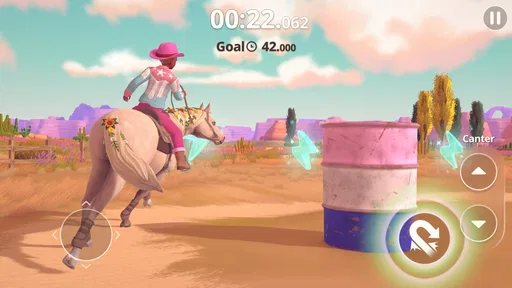

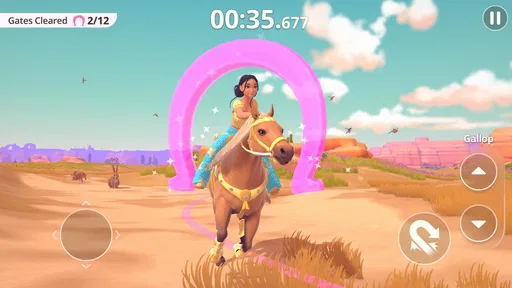



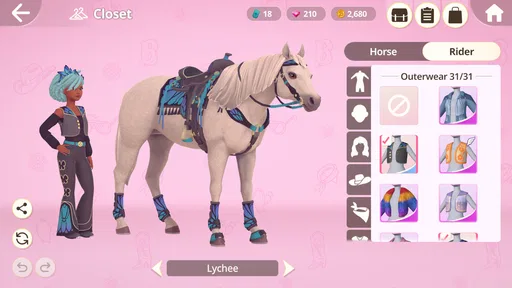
Our Review of Barbie™ Horse Ride & Rescue
 Analysis by Appyee
I approached Barbie™ Horse Ride & Rescue as a light adventure game rather than a demanding simulation. Developed by PIKPOK, it places Barbie and her horses at the center of a colorful equestrian experience, with riding, stable customization, and rescue-themed moments shaping the overall appeal. The idea is easy to understand, but the important question is whether the game remains enjoyable after the first few sessions, especially on a phone or tablet that is already used for everyday tasks.
My first impression is that this is aimed at players who want a friendly, approachable horse game instead of a complicated management title. The free entry point makes it easy to try, while the Everyone age rating keeps the presentation accessible for younger players and families. At the same time, the presence of optional purchases ranging from $0.99 to $99.99 per item means adults should still pay attention when setting up the device for a child.
How the game feels during ordinary play
The basic rhythm is built around riding horses, spending time with the stable, and taking part in an adventure connected to Barbie. That combination gives the game a useful sense of variety: riding provides movement, while stable dressing offers a more relaxed activity. I like that these two sides appeal to different moods. A player can come for the adventure and then stay for the creative customization, or do the opposite and treat the riding as a break from decorating.
The game is currently at version 1.1.2, and it has passed the early novelty stage with more than 500 thousand installs. Its average rating is 3.9 from about 1.9 thousand ratings, which suggests a generally positive but not universally enthusiastic response. I would read that as a reason to keep expectations sensible: this is likely to work best when you want a cheerful, accessible experience, not when you are searching for the depth of a full horse-care simulator.
In practical terms, the speed of play feels more important than raw technical speed. The game’s concept is suited to short sessions, such as a few minutes while waiting for an appointment or winding down before bed. I would not choose it primarily for intense action. Its appeal comes from the change between riding and personalizing the stable, so the best experience is one where you give yourself time to explore rather than rush through every activity.
A realistic everyday use case would be a parent handing over a tablet during a quiet afternoon. The child can begin with the recognizable Barbie setting, try the horse-riding activities, and then move into stable decoration when they want something calmer. That transition is useful because it avoids making the whole experience depend on one type of challenge. However, I would still supervise the first session, both to explain the controls and to make sure purchase settings are appropriate.
Why the speed expectations should stay modest
There is a difference between a game being quick to understand and a game being technically demanding. This title appears designed around immediate accessibility. I found that a strength for younger players and casual users, because there is less pressure to memorize complex systems before having fun. The trade-off is that experienced adventure players may find the structure gentler than expected.
When I compare it with more traditional horse games, I see a clear difference in priorities. A dedicated simulation usually asks the player to manage many layers of care, training, equipment, or progression. Barbie’s game is more inviting when the goal is to ride, personalize, and enjoy the theme without turning every activity into a long-term responsibility. If your ideal horse game includes detailed breeding, realistic economics, or highly technical riding, this is probably not the better choice.
The lighter approach also makes it a reasonable first horse game. A child who is interested in horses but does not yet want a complicated management system can understand the central idea quickly. I would recommend trying the game with a simple routine: begin with one riding activity, spend a few minutes in the stable, and then decide whether the available variety feels satisfying. That gives a better impression than judging it only from the opening moments.
What happens when the game gets more demanding
The busiest moments are likely to come when riding, adventure activity, and customization are combined in the same session. Even without treating the game as a technical benchmark, this is where I would pay attention to responsiveness and battery use. A player who repeatedly switches between active play and stable editing is asking the device to handle more than a single quiet menu screen.
On a newer device running a supported operating system, I would expect the experience to be the most comfortable. The minimum operating-system requirement is Android or iOS 10, which gives the game a broad compatibility range, but compatibility does not mean every older phone will feel equally smooth. Older hardware may have less spare memory, a weaker battery, or slower recovery when the game is reopened after other apps have been used.
That leads to one of my more useful tips: before a longer play session, close demanding apps that are running in the background and avoid starting with a nearly empty battery. This is not a special trick for the game so much as a sensible way to reduce interruptions on older devices. If the phone becomes warm or the game feels less responsive, shorter sessions are more practical than forcing a long play period.
Another helpful habit is to let the game settle after launching. Instead of tapping rapidly through every screen, I would give it a moment to finish opening before moving between activities. Younger players often press repeatedly when a screen takes a little time to respond, which can make a simple delay feel like a control problem. A calmer start makes it easier to tell whether the issue is the device, the connection, or the game itself.
The game’s free price is convenient for testing, but the purchase range deserves a deliberate approach. I would not let a child play with unrestricted purchasing enabled, especially because the highest-priced individual items can be significant. The most sensible workflow is to try the free experience first, decide whether the riding and stable activities are genuinely being used, and only then consider optional spending. That keeps customization from becoming the reason the game is installed in the first place.
Stability, interruptions, and getting back into play
For me, reliability in a mobile game is not only about avoiding crashes. It also includes whether the game is easy to resume after a phone call, a notification, or a switch to another app. Barbie’s Horse Ride & Rescue is most suitable for casual play because its theme naturally fits interrupted sessions. If you need to put the phone down, the game does not have to compete with a long uninterrupted gaming block in the same way a story-heavy adventure might.
I would still test recovery early. Start an activity, leave the game briefly, and return to see how naturally the session continues. This is particularly important on a family tablet shared with other apps. If the device tends to reload games aggressively, a child may lose patience even when the game itself is enjoyable. The operating-system requirement tells you whether the device can install it, but the way that device handles background apps is what shapes everyday comfort.
There is also a practical distinction between restarting the game and losing progress. I would avoid assuming that every interruption will preserve the exact point where you stopped. For family use, it is better to finish a small activity before handing the device to someone else, rather than switching away in the middle of an important moment. That simple routine reduces frustration and makes the game feel more dependable.
At the time of my review, I would describe the overall reliability as suitable for casual use, with the usual caution for older hardware. The rating of 3.9 indicates that the experience works well for many players but has enough mixed feedback to discourage an unconditional recommendation. I would treat that score as a reminder to install it on the intended device and test it personally, particularly if smooth performance is a priority.
Device limits that matter more than expected
The minimum OS of 10 is not especially restrictive for a modern family device, but the age of the phone or tablet still matters. Storage space, available memory, battery condition, and how many other apps remain open can all affect the experience. I would leave comfortable free storage rather than installing the game on a device that is already close to full. A crowded device is more likely to make every app feel slow, not just this one.
Screen size is another consideration. A larger tablet can make stable decoration and riding easier for younger players because controls and visual details have more room. A small phone is more portable, but it may feel cramped during active play, especially if the player’s hands cover part of the screen. For a child, I would choose the device that offers the clearest view and the easiest grip, not simply the newest one.
The game is free to download, but the purchase structure can change how suitable it is for different households. Families that want a completely purchase-free experience should use device-level restrictions before installation. Players who dislike any form of optional spending may also prefer a paid game with a clearer one-time model, even if that alternative offers less flexibility at the beginning.
Age suitability is one of the title’s more approachable qualities. It is rated Everyone, and the Barbie setting makes the game easy to introduce to younger players. Still, an age rating does not replace parental guidance around screen time or purchases. I would set a session limit, explain that stable items may involve optional spending, and encourage the child to explore what is already available before asking for anything extra.
Who will enjoy it, and who should look elsewhere
I think this game is a good fit for Barbie fans, children who enjoy horses, and casual players who like switching between movement and decoration. It also makes sense for families looking for a free game that can be sampled without committing to an upfront purchase. The combination of riding and stable styling gives it more personality than a simple endless ride, while the adventure framing gives the activities a recognizable purpose.
I would be more cautious recommending it to players who want realistic equestrian technique. This is not the title I would choose for someone interested in detailed horse-care routines, competitive riding, or a simulation that rewards long planning. Those players may be happier with a specialist horse game, even if it is less colorful and less immediately accessible.
It may also disappoint someone expecting a large open-world adventure. The store summary emphasizes horses, the stable, and an equestrian adventure with Barbie, but that should not automatically be interpreted as a vast world with unlimited exploration. I approached it as a focused mobile experience and found that expectation healthier. If you want a compact themed game for casual sessions, the format makes sense; if you want a deep, expansive campaign, look at larger adventure games instead.
One non-obvious strength is the way stable customization can make the game more social within a family, even when only one person is holding the device. A child can show a parent the choices they made, explain why a particular horse or stable style feels right, and then return to riding. That gives the game a conversation-friendly quality that is easy to overlook when focusing only on action.
A second useful insight is that the customization side can act as a low-pressure fallback when active riding becomes tiring. Rather than ending the session as soon as the player loses interest in movement, the stable offers a different pace. That makes the game more adaptable than a title built entirely around racing or repeated challenges. The trade-off is that players who do not enjoy decorating may feel that part of the experience adds little value.
A third consideration is purchase discipline. Because the game’s appeal includes making the stable feel personal, optional items can be tempting even when the free activities are already enjoyable. I recommend treating purchases as a later decision, not as part of the tutorial. If the game is being used by a child, an adult should make that decision separately and explain the limit clearly.
My performance verdict after weighing the trade-offs
My overall view is positive but measured. Barbie™ Horse Ride & Rescue works best as a friendly, low-pressure adventure for short and medium sessions, especially on a reasonably modern phone or tablet. The riding gives the game motion, the stable gives it a creative pause, and the Barbie theme provides a clear identity for its intended audience.
Its main limitation is not that it tries to do too little; it is that players may expect more depth from the horse theme than the accessible format is designed to provide. I would not replace a serious equestrian simulator with this game, and I would not recommend it to someone seeking demanding technical gameplay. For a younger player or a family looking for an easy-to-start adventure, however, its simplicity is a benefit rather than a flaw.
PIKPOK has positioned the game as a free experience, so the sensible test is straightforward: install it on the device that will actually be used, try both riding and stable customization, and observe how it behaves after switching away and returning. That quick check answers the practical questions better than the title alone. If the controls feel comfortable and the device resumes play cleanly, the game is likely to fit casual family use.
I would recommend it to a friend who wants a cheerful horse-themed game for a child, a Barbie fan, or anyone who enjoys decorating as much as exploring. I would add two conditions: manage optional purchases from the start, and keep expectations below full simulation depth. With those boundaries in place, the free entry point, Everyone rating, and approachable adventure structure make it an easy game to try. It is not the most demanding horse experience, but it does not need to be; its value is in making riding and stable creativity feel simple enough to pick up whenever you have a little time.
Privacy and Permissions
See what permissions an app requests and how it handles your data.
- Wi-Fi connection information
- view Wi-Fi connections
- Other
- view network connections, full network access, prevent device from sleeping, Google Play license check
Verdict
Strengths of Barbie™ Horse Ride & Rescue
- Bright, colorful graphics appeal to younger players.
- Simple controls make riding and rescue tasks easy to learn.
- Horse customization adds a personal touch to gameplay.
- Short activities suit quick play sessions.
- Friendly themes encourage caring for animals.
Limitations of Barbie™ Horse Ride & Rescue
- Gameplay may feel repetitive after completing the main activities.
- Some features or items may require in-app purchases.
- Limited challenge may not satisfy older children or adults.
- The app can use considerable storage on some devices.
- Progress may depend on watching ads or online connectivity.
Other Releases by PIKPOK
View All
Into the Dead 2: Zombie Killer
Action4.5

Rival Stars Horse Racing
Sports4.4
Similar Picks in This Category
View All
Roblox
Roblox Corporation4.2

Pokémon GO
Niantic, Inc.3.5

Ninja warrior: legend of adven
TOH Games4.6

Ninja Arashi
Black Panther4.6

Eyes - The Horror Game
Fearless Games sp. j.4.5

Critical Action:Gun Strike Ops
FPS Shooter & Action Game4.3
Frequently Asked Questions
What is Barbie™ Horse Ride & Rescue about?
Barbie™ Horse Ride & Rescue is a family-friendly adventure game centered on caring for, riding, and helping horses. Players explore colorful environments, take part in horse-related activities, and complete rescue or care tasks inspired by Barbie’s world. It is designed primarily for younger players, with simple controls, bright visuals, and gameplay focused more on exploration and nurturing than difficult competition.
Is Barbie™ Horse Ride & Rescue suitable for children?
The game is generally aimed at children and Barbie fans, especially players who enjoy animals, exploration, and gentle adventure. Its controls and objectives are relatively accessible, although parents should still check the recommended age rating for their child’s device and region. It is also worth reviewing the app’s privacy information, advertising settings, and purchase options before allowing younger children to play independently.
Does Barbie™ Horse Ride & Rescue require an internet connection?
Some parts of Barbie™ Horse Ride & Rescue may work without a continuous internet connection after the required game files have been installed, which can make it convenient for travel or offline play. However, an internet connection may still be needed for the initial download, updates, account-related features, advertisements, or optional content. Availability can differ between Android and iOS versions.
Are there in-app purchases or advertisements in the game?
Before downloading, parents should check the current store listing because monetization features can vary according to the platform, version, and region. The game may include optional purchases, advertising, or additional content. If children will use the app, it is advisable to enable parental controls, require approval for purchases, and review the permissions requested during installation to avoid unexpected charges or unsuitable promotional material.
What devices are compatible with Barbie™ Horse Ride & Rescue?
Compatibility depends on the specific Android or iOS version available in your region. The game may require a relatively recent operating system and enough free storage for the application and future updates. Check the official Google Play or App Store listing before downloading to confirm supported devices, age rating, file size, and any hardware requirements. Older phones or tablets may experience slower performance or incompatibility.
Play our best games!


